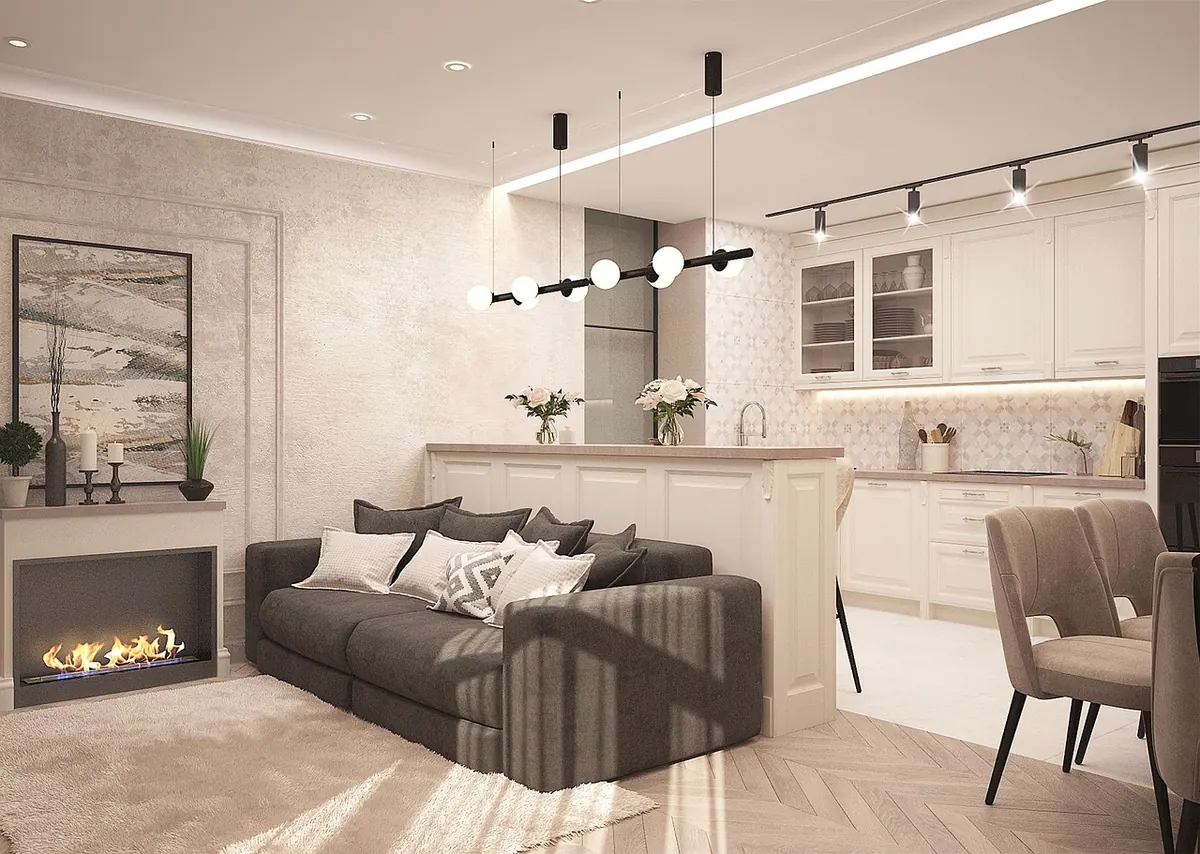
A fireplace is one of those purchases you think about in autumn and pay for all winter. Two households can buy almost identical-looking fires and end up with very different bills, because running costs depend on three things: the price of the fuel, the efficiency of the appliance, and how many hours it actually burns. Here is how electric, gas and wood compare across purchase, installation and the cost of an evening in front of the flames.
The one number that decides everything
Running costs come down to cost per hour, and cost per hour is heat output multiplied by fuel price. An electric fire is rated in kilowatts, so a 2 kW model uses two units of electricity for every hour it runs at full heat. A gas fire is rated by heat output, but how much gas it burns depends on its efficiency — an open-fronted model sends a fair share of that heat straight up the chimney. A wood stove is measured in kilograms of logs, which vary enormously in how much heat they release.
So before comparing anything, find your current unit rate in pence per kWh on your energy bill. It is the biggest single variable in this whole calculation, and it changes far more often than any appliance specification does.
Electric fireplaces
Electric is the cheapest and simplest option to install. A plug-in model needs nothing more than a socket and a bit of wall or floor space: no flue, no chimney, no gas connection, no registered installer. That makes electric fires popular in flats, rented homes, extensions with no chimney breast, and rooms where a real flue would be awkward or impossible.
Running costs are the trade-off. Electricity costs several times more per unit than gas in most UK homes, so per hour of delivered heat an electric fire is usually the most expensive way to warm a room. A 1 kW setting costs half what a 2 kW setting does, and many models let you run the flame effect alone with the heater off — that is where electric fires earn their keep. If you want the look of a fire all evening and actual heat for twenty minutes, the maths works nicely.
Do not confuse efficiency with economy here. Every unit of electricity an electric fire draws ends up as heat in the room, so nothing is wasted through a flue. The problem is the price of each unit, not the appliance's ability to use it.
Gas fireplaces
Gas gives you instant heat, a real flame and no logs to carry. Fitting one is a job for a Gas Safe registered engineer, and the flue arrangement matters a great deal. Balanced flue models draw air from outside and are sealed from the room, so they tend to be far more efficient than open-fronted gas fires, which lose a good proportion of their heat up the chimney. Flueless catalytic models exist, but they have specific room size and ventilation requirements.
Per unit, gas is cheaper than electricity, so an efficient glass-fronted gas fire can cost less per hour to run than a comparable electric one. The real competition, though, is your boiler. If you have gas central heating, the boiler will usually heat the whole room more cheaply than a gas fire heats part of it. Treat a gas fire as instant warmth, convenience and atmosphere rather than a way to cut your heating bill. Budget for an annual service, and remember the standing charge applies whether you use gas for heating or not.
Wood stoves and open fires
Wood is the cheapest fuel per kilowatt hour if you buy well and burn well — and one of the most expensive if you do not. Wet logs are the classic mistake: unseasoned wood wastes much of its energy boiling off water, produces less heat and coats your flue with tar. Seasoned hardwood below 20% moisture, or properly kiln-dried logs, burn hotter and cleaner, so you get more heat from fewer logs.
A stove is also a commitment of time. It takes a while to light and reach temperature, needs ash removal, and should be swept regularly — annually is the usual advice for regular wood burning. If you live in a Smoke Control Area you must burn an authorised fuel or use an exempt appliance, and your local council can confirm whether your property falls within one. Open fires look lovely but are the least efficient option on this list, since much of the heat disappears up the chimney. A stove with a properly lined flue is a different proposition entirely.
Purchase and installation: where the money actually goes
- Electric: appliance cost alone in the simplest cases. A plug-in fire needs a nearby socket; built-in models may need a surround, hearth and a dedicated supply. No flue, no chimney certification, nothing to sweep.
- Gas: appliance, Gas Safe installation, possibly a flue liner or terminal, ventilation provision and occasional remedial chimney work. Expect paperwork and an annual service.
- Wood: appliance, flue liner and register plate, hearth, ventilation and notification under building regulations. An exempt stove for smoke control areas costs more than a standard one.
- The costs people forget: an outdoor store for logs, a non-combustible hearth or surround, carbon monoxide alarms, a chimney balloon if you keep an open flue, and the labour to remove an old fire and make good the wall.
A quick way to compare your own numbers
- Work out the heat output you genuinely need — a small, well-insulated room may only require 1–2 kW.
- Check your current electricity and gas unit rates, and the price per load or per cubic metre for logs.
- Estimate realistic hours of use per week, and how often you would run it on full output.
- Multiply output by hours by unit price. For gas, use the input rating rather than the heat output to find the fuel cost.
- Add servicing, sweeping and fuel storage, then spread the installation cost over the years you expect to keep the fire.
Choosing for your home, not for the brochure
If the room has no flue and you mainly want the look of a fire with occasional heat, electric is the low-hassle choice. If you already have gas, want warmth within minutes and value a real flame, a well-sealed gas fire suits — provided your boiler is not already doing the job more cheaply. If you have somewhere dry to store fuel, do not mind a bit of work, and want long evenings of steady warmth, a wood stove is hard to beat.
Whatever you choose, check current fuel prices before you commit rather than relying on figures from last winter. Use a Gas Safe registered engineer for gas work and a HETAS registered installer for solid fuel: chimneys, flues and ventilation fall under building regulations, and getting them wrong is a safety issue as much as a cost one. And if you are weighing up a larger heating change alongside the fireplace, it is worth talking to a qualified heating engineer before you spend.
Photo: Sunriseforever / Pixabay