Walk into a Victorian terrace and the fireplace usually tells you where the room's centre is: a slate surround with a cast-iron insert, tiled cheeks and a narrow shelf barely wide enough for two candlesticks, or painted pine under decades of paint. The instinct to rip it out or cover it up is worth resisting. Style what is already there, and the proportions, materials and details keep doing their job.
Start With the Surround, Not the Shelf
Before you buy a single candle, spend ten minutes looking at what you have. Note the material — slate, marble, cast iron, painted timber, glazed tiles — because each one has its own care rules.
Slate and marble take a soft cloth and warm water with a drop of mild soap. Keep acidic cleaners away from marble, as they etch the surface, and abrasive powders away from slate, which they dull. Painted timber can be wiped with a damp cloth, but if the paint is flaking, don't scrub it.
Then ask what the fireplace is good at. A tall surround with a generous shelf will carry a mirror and heavier objects. A small register grate with almost no shelf needs restraint.
Look at the insert as well. A cast-iron combination grate with an arched opening and decorative spandrels is the star of the show; a plain register grate is a quieter frame. Knowing which you have tells you how much styling it will take before it looks busy. An 1880s slate surround, for example, often has a deep moulded shelf and a strong horizontal line — it can carry a mirror and a pair of heavy candlesticks without complaint. A narrow pine surround from a smaller terrace, by contrast, looks best with almost nothing on it at all, bar a small clock or a single vase.
Dress the Mantel Like a Shelf, Not a Shrine
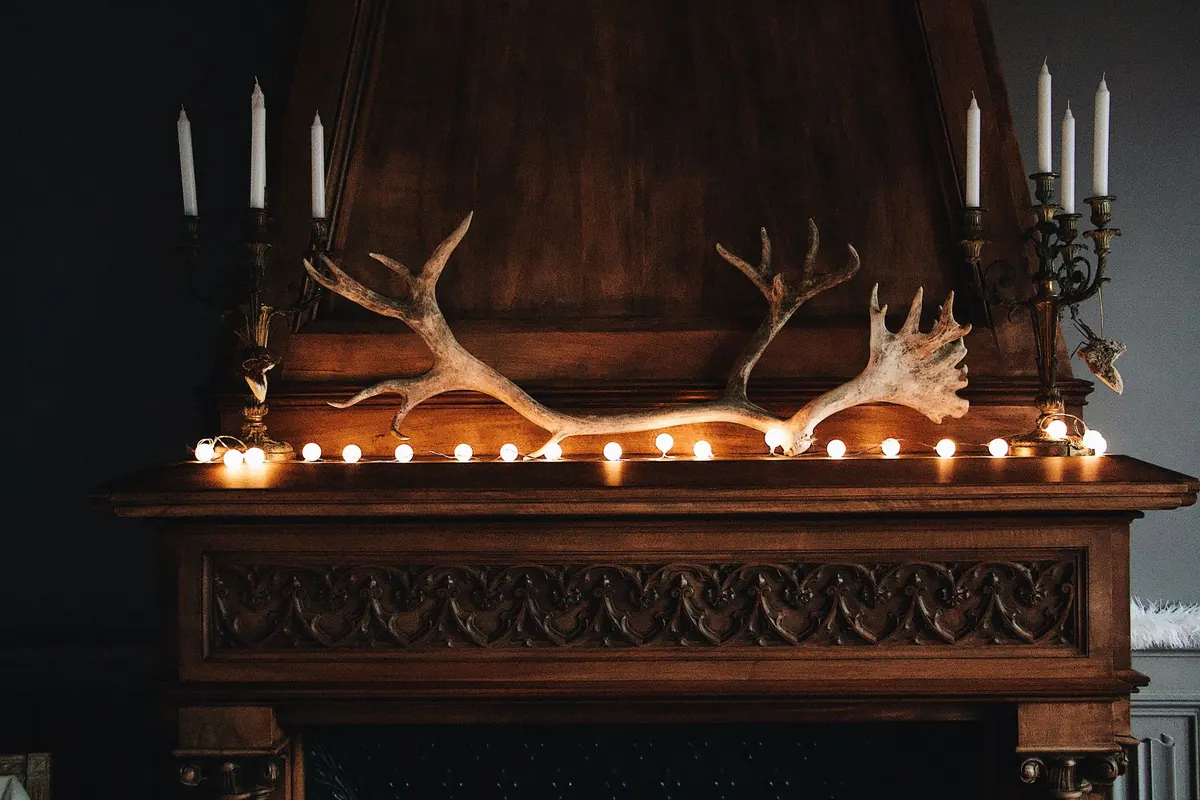
The common mistake is treating the mantel as a display case for everything you love. Ten small objects of the same height read as clutter; three considered ones read as a scheme. Build in layers — something tall at one end, something low and wide to anchor it, a smaller piece to bridge the gap — and leave visible shelf between each group.
Odd numbers balance more easily than even ones, but disparity does the real work. Mix heights, textures and materials: brass against dark wood, glazed ceramic against matte. A pair of identical vases either side of a clock is safe but static; a tall glass hurricane lamp at one end, a low stack of clothbound books at the other, and a small bronze animal in between has far more life.
Seasonal changes cost nothing and keep the arrangement fresh. In winter, dark greens and a pair of thick candles; in summer, a single stem in a clear glass bottle and the candles put away. Rotate two or three arrangements rather than rebuilding from scratch each time.
A five-minute method
- Clear the shelf completely and clean it.
- Put your largest piece off-centre, roughly a third of the way in from one end.
- Add a taller object at the opposite end to counterbalance it.
- Fill the middle with one or two low pieces — a stack of books, a shallow bowl.
- Step back three metres. Whatever looks crowded, take away.
Watch the weight. A narrow shelf on a timber surround is not a bookshelf, so if you want to display something substantial, check how the shelf is fixed before you trust it.
Clean the Tiles, Don't Replace Them
Original tiled cheeks and hearth tiles are often the most characterful part of a Victorian fireplace, and the first thing people want to change. If yours are intact, warm water and a soft cloth are enough. Grout lines can be worked with a small brush, but harsh scrubbers and strong cleaners strip the glaze and leave a permanent dull patch.
Where tiles are missing, look for reclaimed pieces or reproductions that match the size and pattern. Tiling over the originals is hard to undo and loses the detail worth keeping. A cracked but stable tile can stay; slight wear is part of the point. Loose tiles should be re-fixed by someone experienced, particularly where heat makes the surround move.
Colour is usually the surprise. Victorian tile palettes were bolder than most modern rooms allow — oxblood, deep green, cobalt, buff and cream — and they anchor a scheme rather than fighting it. If the tiles feel too strong, calm the walls instead of covering the fireplace. A soft off-white or a muted earth tone will let the tiles read as the jewel they were made to be.
Mirrors and Art Above the Fire
An overmantel mirror earns its place: it bounces light, makes a small room feel bigger and frames the fire. Proportions matter more than the frame. The mirror should sit comfortably inside the width of the mantel with a margin either side; one that almost reaches the edges looks squeezed.
Hang it into the wall using suitable plugs and screws, or with mirror plates fixed to the masonry behind. Never rely on the mantel shelf alone, and never guess with plasterboard — get a proper fixing or ask someone who knows.
If you prefer art, one piece works better than a cluster above a fire. Keep watercolours, prints and anything on paper away from the direct heat and smoke of a working chimney, or save that spot for the summer months. An oil painting or a glazed print in a solid frame copes better, but even then, soot finds its way onto glass. Clean it gently and often.
A mirror can also do something a picture cannot: it doubles the light from the fire and from any candles on the mantel. If you use the fireplace in the evening, angle the mirror slightly downward so it catches the flames rather than reflecting the ceiling.
The Hearth, Fender and Fire Tools
The hearth is a working surface, so style it in a way that keeps the fire usable. Rugs and runners stay clear of the opening and the fender line, and wool copes with stray sparks better than most synthetics. A small rug beside the hearth reads warmer than one underneath it.
A cast-iron or brass fender defines the edge and stops ash spreading. A log basket or scuttle stores fuel and adds texture. Keep the essentials to hand — poker, tongs, ash shovel and a stiff brush — in a stand or a basket rather than scattered along the hearth.
Kiln-dried logs burn more cleanly than damp ones, and the grate stays hotter and cleaner if you do not overload it. Store a day's fuel beside the fire and the rest somewhere dry; a basket that is too full looks like a chore, while a modest one looks like a habit.
Light the Fire Well
Half the character of a Victorian fireplace is in the way it is used, not just the way it is dressed. Lay the fire properly: crumpled paper or a firelighter at the back, a small criss-cross of kindling above it, and two or three logs on top, with air able to move through the stack. Open the damper or air vent before you strike a match.
A well-laid fire lights without drama and burns down to clean ash. A poorly laid one smokes, spits and blackens the tiles within a season. That is not only a maintenance issue; it is an aesthetic one. Soot on cream tiles is the fastest way to lose the crispness of a Victorian surround.
If the chimney draws poorly, check the basics first: an open window in the room can help, a cold flue may need warming with a rolled newspaper torch, and a bird's nest or a blocked flue needs a sweep. No amount of styling compensates for a fireplace that smokes.
When the Chimney Isn't Usable
Plenty of Victorian fireplaces are decorative rather than working. That is not a reason to ignore them. A chimney balloon or a capped flue stops draughts, and a removable board or a sweep's brush can close off an open chimney when it is not in use.
With the flue sealed, the fireplace becomes a display niche with a hearth. A cluster of church candles in the grate, a dried flower arrangement for the warmer months, or a small stack of logs that are never burned can all work — as long as they are obviously decorative. Never light a fire in a flue that has not been checked, and never treat a blocked chimney as a working one.
If you want real flame without the chimney, a well-chosen stove or a bioethanol insert can sit in the opening, but the surround still deserves the same care. The fire is the new element; the Victorian frame is the permanent one.
Paint, Colour and Small Adjustments
Paint is the least permanent change and often the most effective. A painted pine surround that has gone yellow can be brought back with a wash and a fresh coat of eggshell in a colour drawn from the tiles. If the surround is slate or marble, leave it alone; paint on stone rarely improves it and is difficult to reverse.
Cast iron can be refreshed with stove polish or a specialist black lead substitute, which deepens the metal and hides light rust. Do not use ordinary household paint near a working fire. Brass fenders, fire tools and register grates can be left to patinate or polished back to brightness, depending on the look you want — just be consistent, because a half-polished set looks unfinished.
A final, inexpensive touch: replace the grate's fire bricks or the fireback if they are cracked, and make sure the ash pan sits properly. Small repairs make the whole fireplace read as cared for, which no amount of styling can fake.
The Point of It All
Style the fireplace you have, not the one you wish you had. The proportions are already doing most of the work.
A Victorian fireplace was designed as the anchor of a room — a piece of architecture, not a shelf. Keep the surround clean, keep the tiles honest, keep the mantel breathing, and let the fire do the rest. Restraint is not a lack of style here; it is the style.
Photo: Maël BALLAND / Pexels